
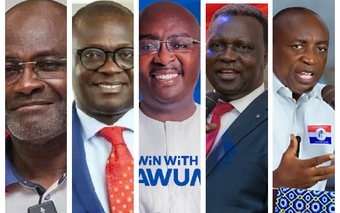
The New Patriotic Party (NPP) will go to the polls tomorrow
Saturday 31st January 2026 in an eagerly anticipated presidential
primary to elect the party’s candidate for the upcoming 2028 general election. This internal
election comes after a long season of campaigning and negotiations among party
heavyweights, marking a critical juncture in the NPP’s efforts to regroup
following its loss in the 2024 general
election.
The decision to hold the
presidential primaries on January 31 was made well in advance by the party’s
leadership and endorsed by its National Council as part of a broader
timeline aimed at revitalising the party’s internal democratic processes. The
primaries are being held earlier than usual, a move that has sparked both
support and debate within party ranks.
Five prominent
party stalwarts are contesting the party’s flagbearer position. Among them
are Dr Mahamudu Bawumia,
former Vice President and front-runner in many delegate
surveys; Kennedy Ohene Agyapong,
former MP and charismatic campaigner; Dr
Bryan Acheampong, former Minister for Food and Agriculture; Dr Yaw Osei Adutwum, former Minister
for Education; and Ing. Kwabena Agyei
Agyepong, ex-General Secretary.
The primaries will be conducted
across numerous polling centres nationwide, with an expanded voter base,
including thousands of verified delegates registered through a broadened party
album. A large number of voting centres and a comprehensive delegate register
reflect the party’s intention to conduct the election under transparent and
inclusive conditions.
Internal debates leading up to
the primaries have centred on contrasting visions for the party’s future.
Supporters of Dr Bawumia argue that his experience and national profile
position him best to lead the party back to power, while backers of Agyapong and
other aspirants emphasise the need for new energy and strategic change within
the party’s leadership.
As delegates prepare to cast their ballots tomorrow, political observers in Ghana are watching closely. The outcome of the NPP primary will not only shape the party’s prospects for 2028 but may also influence broader national political dynamics, including how the opposition positions itself against the governing National Democratic Congress in future electoral contests.
Africanelections.org
 Take Voters' Compass