
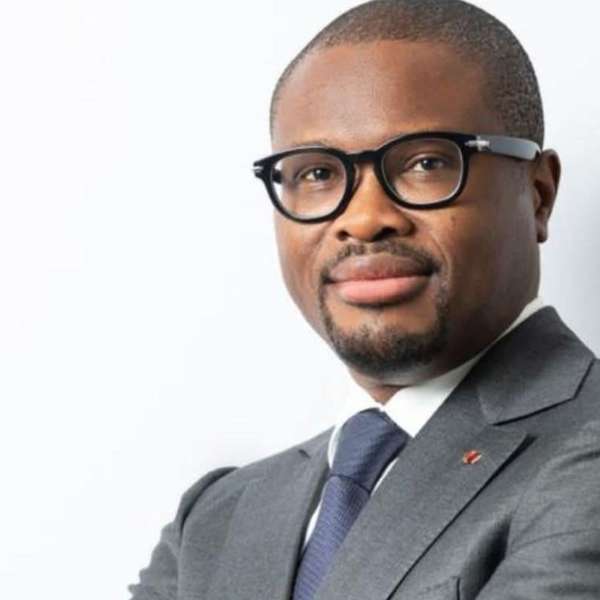
Romuald Wadagni
Country: Benin
Elections Contested: 1
Biography
<p class="MsoNormal" style="">EARLY LIFE & EDUCATION</p>
<p class="MsoNormal" style="">Romuald Wadagni was born on 20
June 1976 in Lokossa, Benin, the eldest of five children.<o:p></o:p></p>
<p class="MsoNormal" style="">Wadagni completed his secondary
education in Benin before pursuing higher studies in France.</p>
<p class="MsoNormal" style="">He graduated at the top of his
class from the École Supérieure des Affaires (ESA) in Grenoble, earning a
Master’s degree in Finance. He subsequently obtained a Chartered Accountant
qualification in the United States. In 2015, he enrolled in the General Management
Program at Harvard Business School, adding an international executive education
credential to his portfolio.</p>
<p class="MsoNormal" style="">CAREER</p>
<p class="MsoNormal" style="">After completing his studies,
Wadagni joined Deloitte, where he spent seventeen years across offices in
Paris, Lyon, Boston, New York, and Lubumbashi. He rose through the firm’s ranks
to become its Professional Practice Director for the African continent,
overseeing the application of international standards across Deloitte’s
Francophone Africa network. In November 2015, he was appointed Head of Audit
for Francophone Africa.<o:p></o:p></p>
<p class="MsoNormal" style="">In 2012, at the age of 36,
Wadagni was promoted to partner - becoming the youngest person ever to reach
partnership at Deloitte. That same year, he opened Deloitte offices in Kinshasa
and Lubumbashi in the Democratic Republic of Congo, extending the firm’s
presence in Central Africa.</p>
<p class="MsoNormal" style="">MINISTER OF ECONOMY AND
FINANCE (2016–2026)</p>
<p class="MsoNormal" style="">In April 2016, following the
election of President Patrice Talon, Wadagni was appointed Minister of Economy
and Finance. He inherited a government grappling with a damaged credit
reputation and heavy legacy debt obligations. His mandate was to restore fiscal
credibility and attract investment.</p>
<p class="MsoNormal" style="">Under his stewardship, Benin made
its foray onto international capital markets. In October 2018, he secured a
€260 million loan on the international markets. On 12 January 2021, Benin
issued two Eurobonds, including an 11-year bond at a rate of 4.9% raising €700
million. In July 2021, Benin became the first African country to issue a
Sustainable Development Goals (SDG)-linked Eurobond, raising €500 million at
4.9% to finance projects aligned with the United Nations’ Sustainable
Development Goals - a landmark transaction that signaled growing investor
confidence in Benin’s fiscal management.</p>
<p class="MsoNormal" style="">In July 2022, the International
Monetary Fund approved a blended 42-month arrangement under its Extended Fund
Facility (EFF) and Extended Credit Facility (ECF) for Benin amounting to US$638
million. It was the first programme approved under the IMF’s High Combined
Credit Exposure (HCCE) policy, reflecting an unprecedented level of
institutional confidence in Benin’s economic management under Wadagni.</p>
<p class="MsoNormal" style="">In February 2024, Wadagni oversaw
the issuance of a US$750 million dollar-denominated sovereign bond at a
competitive rate of 7.96%, which Bloomberg noted was achieved at notably low
yields for a West African sovereign, propelling Benin to rank among Africa’s
most creditworthy dollar-bond issuers.</p>
<p class="MsoNormal" style="">In 2020, UNCTAD ranked Benin as
the easiest and fastest country in the world in which to start a new business,
a finding that illustrated the scale of regulatory reform achieved during his
tenure. That year, Benin also recorded growth of approximately 3.8% despite the
COVID-19 pandemic, placing it among the three highest-growth economies in
sub-Saharan Africa.<o:p></o:p></p>
<p class="MsoNormal" style="">In October 2023, Benin ranked
eighth globally in the Tax Expenditure Transparency Index, maintaining its
position as the most transparent country in Africa on this measure. The 2024
Open Budget Survey further recognised Benin as the most transparent budget in
the Francophone world.</p>
<p class="MsoNormal" style="">THE 2026 PRESIDENTIAL ELECTION</p>
<p class="MsoNormal" style="">On 31 August 2025, Benin’s ruling
coalition comprising the Union Progressiste pour le Renouveau (UPR) and the
Bloc Républicain (BR) unanimously designated Romuald Wadagni as their candidate
for the presidential election. The nomination came after Wadagni withdrew, in
January 2025, from a candidacy for the presidency of the African Development
Bank, widely interpreted as a signal that President Talon had chosen him as his
preferred successor.</p>
<p class="MsoNormal" style="">The 12 April 2026 election saw Wadagni
secure 94.05% of the vote, with his main opponent, Paul Hounkpè receiving
5.95%. Voter turnout was 58.75%. Hounkpè conceded ahead of the official
announcement.</p>
<p class="MsoNormal" style="">In his campaign, Wadagni pledged
to pursue industrialisation, expand special economic zones, address a growing
jihadist insurgency in Benin’s northern departments, and ensure that economic
growth benefits all Beninese equitably.<o:p></o:p></p>
Election History
| Title | Date | Country |
|---|---|---|
| Benin Presidential Election 2026 | April 12, 2026 | Benin |
 Take Voters' Compass